
A Day of Care at Home: What One Smart Bed Changes for the Family Caregiver
A day of home care is a long list of small, repeated tasks: sitting up for meals, turning, toileting, cleaning, bathing. On the CH-ENB-01, the bed takes over the heaviest of them. It monitors 24 hours, opens the bedpan door in 1 second, cleans 360° with 6 wide-angle nozzles, discharges waste into the sewer and blow-dries — without a bedpan and without the caregiver lifting. It turns left and right, sits the user up at the touch of a button, and lets one person bathe the user in bed with the included inflatable tub. The family still checks skin, serves meals and keeps company. What changes is not the care, but how much of it is heavy lifting.
Morning: the first sit-up sets the tone
The day starts with sitting up. Breakfast, medicine, a drink of water, a few words — everything needs the person upright first. On the CH-ENB-01, the backrest adjusts from 0 to 85°, the leg rest adjusts, and one button brings the user to a sitting position. It takes seconds, and it takes no strength from the caregiver. That matters because the first task of the day is also a preview of the day: if every sit-up is a physical struggle, the caregiver is already tired before breakfast is over.
Overnight, the bed has been monitoring on its own. Toileting during the night ran its own cycle — detection, a 1-second door, cleaning, discharge into the sewer, blow-drying — without waking the caregiver for a bedpan round. A caregiver who slept through the night starts the day as a different person from one who got up several times.
Through the day: toileting stops being the schedule
Ask any family caregiver what runs their day, and the answer is usually toileting. It decides when they can leave the room, when they can cook, when they can rest. Several times a day, someone has to help with a bedpan, clean up, and change linen — and the person in the bed has to ask for help and wait for it.
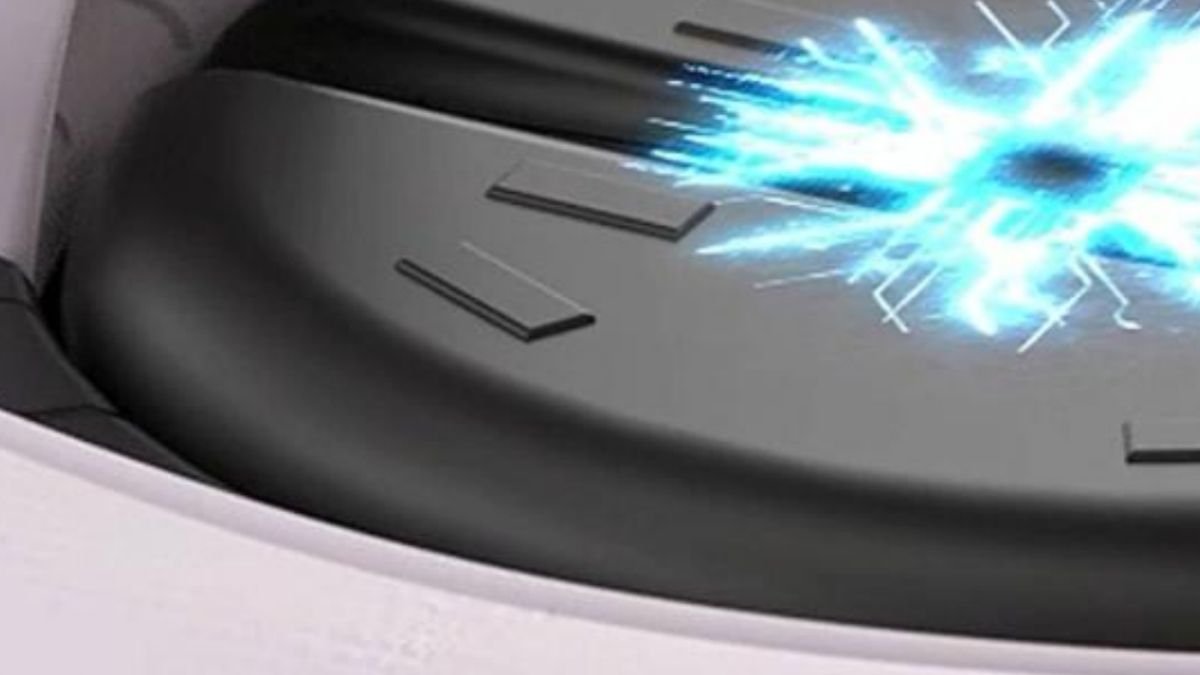
With automatic toileting, that schedule loosens. Use is detected automatically, the bedpan door opens in 1 second, 6 wide-angle nozzles clean 360°, waste is crushed and discharged into the sewer, and the body is blow-dried. No bedpan is used, waste is never seen or handled, and retained water seals the drain against odour. Water temperature, air temperature and cleaning time can be set to the user’s needs from the control panel, which also has a child lock and a self-check screen.
The caregiver is still in the house. They are just no longer on a toileting rota. The hours that went to bedpan rounds become hours for cooking, for a walk, for rest — or simply for sitting with the person instead of cleaning up after them.
Turning: the task that hurts the caregiver
Turning is the heaviest single task in home care. A body that cannot move has to be turned regularly to protect the skin, and doing it by hand — rolling, holding, placing supports — is hard on the caregiver’s back, especially alone. It is also the task most likely to be skipped when the caregiver is tired, which is exactly when the skin needs it most.
The CH-ENB-01 turns left and right, manually or automatically, and its automatic turning and wave massage air cushion supports pressure ulcer prevention. The caregiver still checks the skin daily and decides the routine. But the lifting part of the turn is no longer a purely manual job, and a turn that happens on schedule is worth more than a turn that depends on the caregiver’s remaining strength at the end of the day.
Bathing: from a two-person job to one person in bed
Bathing day used to be the hardest day of the week. Moving a bedridden person to a bathroom is a two-person lift at best, and for many families it means bathing happens rarely, or not at all.
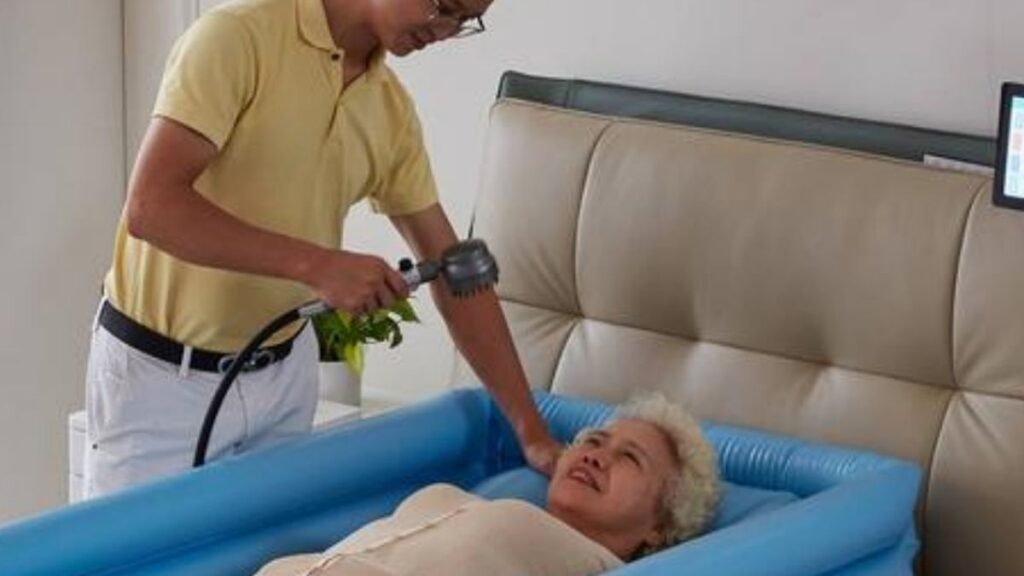
With the CH-ENB-01, one person can bathe the user in bed with the included inflatable bath tub and handheld shower, and bathing wastewater discharges into the sewer automatically. The tub is included as standard. It is still a job that takes time and attention — washing, drying, checking the skin while you are there — but it no longer needs two people and a transfer. For a single caregiver, that is the difference between bathing once a week and bathing when the person needs it.
Meals and company: what the bed gives back
When the heavy tasks take less of the day, something else comes back: time with the person. Sitting up for a meal at the touch of a button, eating together instead of rushing, talking without watching the clock for the next bedpan round — this is the part of care that no machine can do, and it is the part that suffers first when the caregiver is exhausted.
The bed’s automatic air supply system keeps air moving around the user, and the backrest holds any position from 0 to 85°, so the person can sit up for a meal, recline for a rest, or lie flat to sleep without the caregiver re-adjusting everything each time. Small comforts, repeated daily, are what make a long period of home care bearable for both sides.
Night: the test of whether home care can last
Night is where home care succeeds or fails. A caregiver who has to get up several times a night for toileting is not just tired the next day — over weeks and months, broken sleep wears down their health, their patience, and their ability to keep caring at home. Many families move a relative into a facility at this point, not because they want to, but because one person cannot sustain broken nights indefinitely.
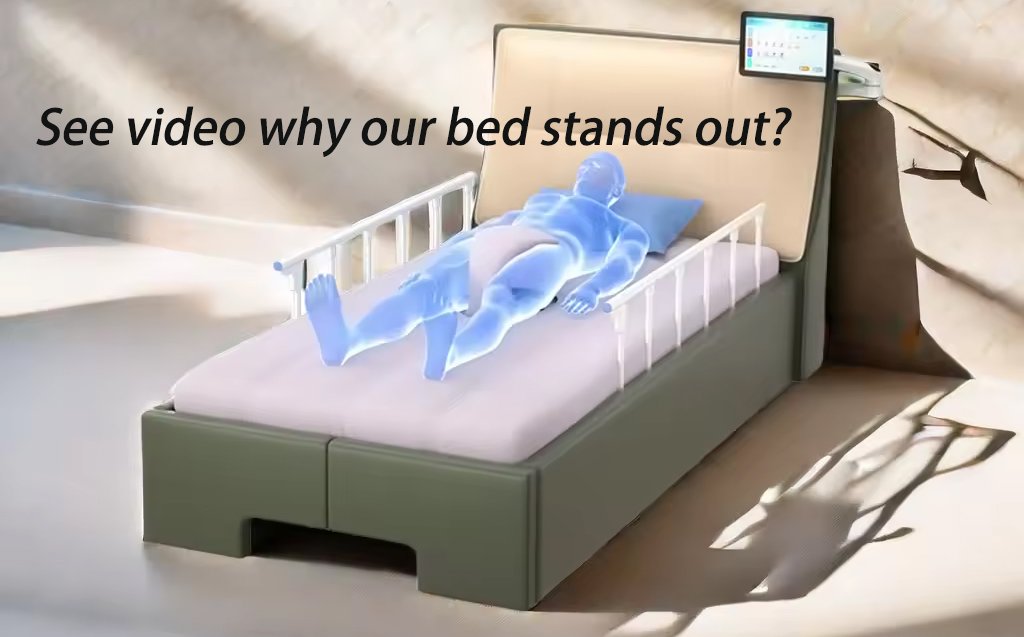
The CH-ENB-01 monitors 24 hours and runs its cleaning cycle on its own once use is detected. The caregiver still sleeps in the house, but they are no longer on a toileting rota through the night. That one change is often what makes home care sustainable for months instead of weeks.
What the family still does
The bed takes over the heavy, repeated tasks. The family still does the human ones: checking the skin daily, turning supervision, helping with meals, keeping the person comfortable, noticing changes and calling for help when something is wrong. The point is not to replace the caregiver. It is to take the heaviest, most private tasks off one person’s list, so the care they do give can be about the person, not about waste.
One requirement, stated plainly
The bed must be connected to a drain / sewer pipe, because waste and bathing water are discharged into the sewer. There is no fixed requirement for drain distance or pipe size; the final placement is checked at installation. The bed is 230 × 110 cm overall and 58 cm high, runs on 220–240V~, 50Hz, 950W for indoor use only, and the bedside cabinet is 47 × 47 cm and 63 cm high. Check the drain point before you order — it is the one thing that decides whether this kind of bed can work in a given bedroom.
FAQ
What does the bed actually do on its own?
It monitors 24 hours, opens the bedpan door in 1 second when use is detected, cleans 360° with 6 nozzles, crushes waste and discharges it into the sewer, blow-dries, turns left and right, and sits the user up at the touch of a button.
Does the caregiver still need to be there at night?
Yes, someone should be in the house. But the caregiver no longer has to get up for every toileting round — monitoring and the cleaning cycle run on their own.
Can one person bathe the user alone?
Yes. One person can bathe the user in bed with the included inflatable bath tub and handheld shower, and the wastewater discharges into the sewer automatically.
What does the family still have to do every day?
Check the skin, help with meals, keep the person comfortable, watch for changes, and be there. The bed removes the heavy lifting, not the caring.
What does the bed need from the home?
A drain / sewer connection, a 220–240V~, 50Hz power supply, and room for a 230 × 110 cm bed. The final placement is checked at installation.
See the full model, specifications and test reports on the product page. For a quote, please email admin@chinahospitalbed.com with your country, quantity and intended use.