

Incontinence Care Without a Bedpan
Incontinence care is usually the heaviest, most private and most tiring part of bed care — several times a day and again at night. An automatic toileting bed changes how it is handled rather than making incontinence disappear: on the CH-ENB-01, 24-hour monitoring detects use, the bedpan door opens in 1 second, 6 wide-angle nozzles clean 360°, waste is crushed and discharged into the sewer, and the body is blow-dried. No bedpan is used, waste is never seen or handled, and retained water seals the drain against odour. The bed must be connected to a drain / sewer pipe.
The task nobody warns you about
Ask any family caregiver what the hardest part of the day is, and the answer is rarely lifting or feeding. It is incontinence care: several times a day, and again at night, someone has to help with a bedpan, clean up, change linen, and do laundry — while the person being cared for loses privacy in the process. It is exhausting, it is embarrassing, and it is the task most likely to wear a family caregiver down. New caregivers are almost never warned about it in advance, which is why it hits so hard when it becomes the daily routine.
The night-time problem
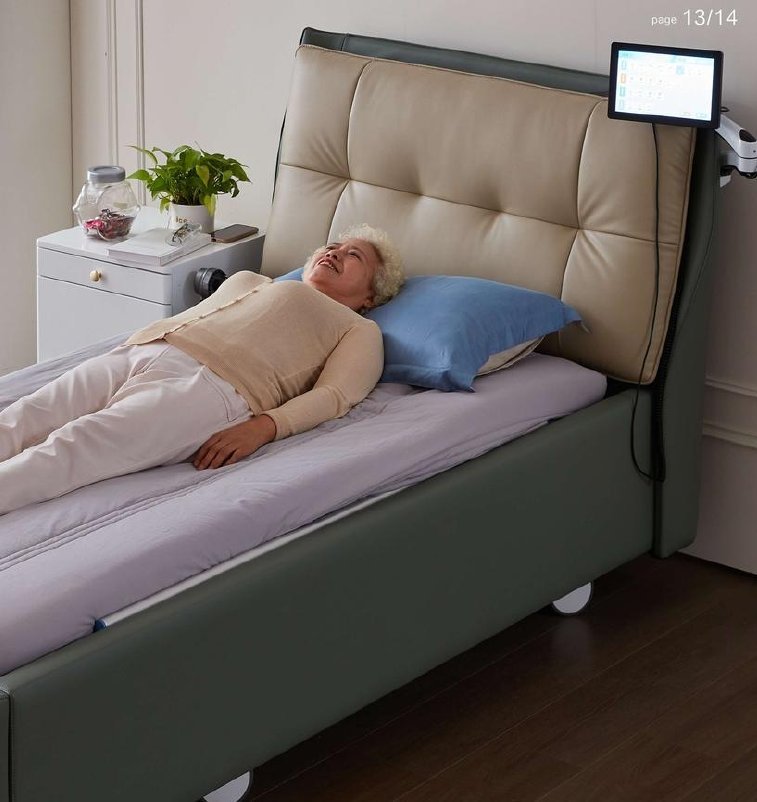
Night time is where the burden is heaviest. A caregiver who has to get up several times a night to help with toileting is not just tired the next day — over weeks and months, broken sleep affects their health, their patience and their ability to keep caring at home. This is the point at which many families start considering a facility, not because they want to, but because one person cannot sustain broken nights indefinitely. A bed that monitors 24 hours and runs its cleaning cycle on its own takes the night-time lifting out of this one task. The caregiver still sleeps in the house, but they are no longer on a toileting rota through the night.
Dignity is not a luxury
For the person in the bed, dignity matters as much as hygiene. Being lifted onto a bedpan, waiting while someone else cleans up, and living with the smell and sight of waste in the bedroom is humiliating — and many people will try to drink less, or hold on longer, to avoid it, which only makes things worse. With the CH-ENB-01, use is detected automatically, the bedpan door opens in 1 second, 6 wide-angle nozzles clean 360°, waste is crushed and discharged into the sewer, and the body is blow-dried. Waste is never seen and never handled, and after cleaning, water is retained to seal the drain and prevent odour.
Bedpan routine vs automatic toileting
| Bedpan routine | CH-ENB-01 automatic toileting | |
|---|---|---|
| At night | Caregiver gets up, lifts, cleans, changes linen | Cycle runs on its own |
| Privacy | Patient must call for help and wait | Use detected automatically, door opens in 1 second |
| Waste handling | Bedpan emptied and cleaned by hand | Waste crushed and discharged into the sewer |
| Odour | Bedpan and soiled linen in the room | Retained water seals the drain against odour |
| Skin after use | Depends on manual cleaning speed and thoroughness | Cleaning and blow-drying run the same way every time |
| Laundry | Frequent linen changes from toileting | Far fewer toileting-related linen changes |
Cleaner, drier skin — and fewer linen changes
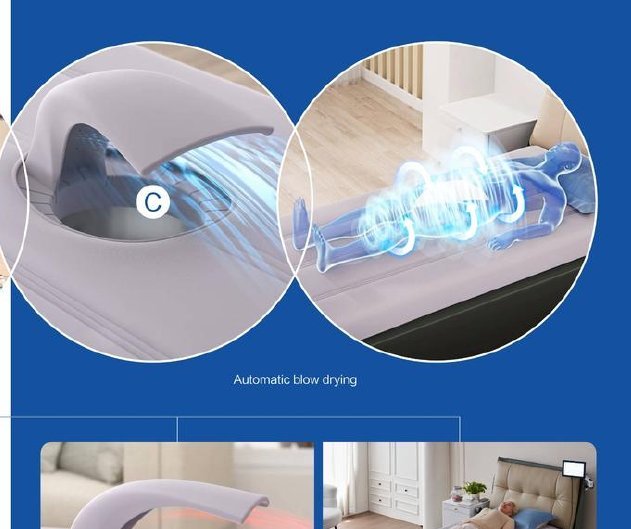
Skin that stays exposed to urine and stool breaks down faster, and damp bedding makes it worse. Automatic cleaning and blow-drying after every use keeps the skin cleaner and drier than a bedpan routine, and it sharply reduces the linen changes and laundry that come with incontinence care. Water temperature, air temperature and cleaning time can be set to the user’s needs from the control panel (which also has a child lock and a self-check screen), so the routine can be made gentler for sensitive skin.
What the family still does
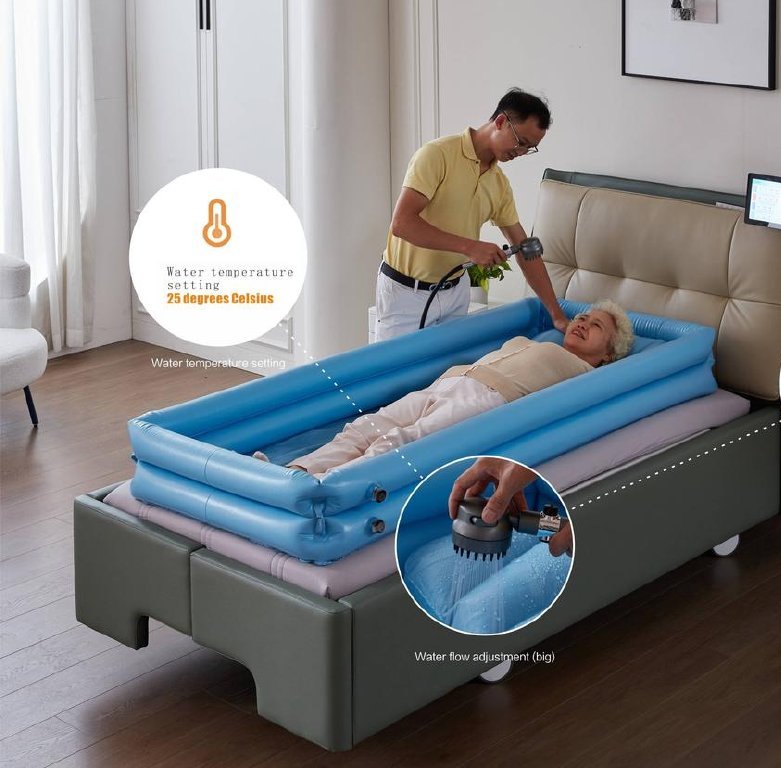
The bed handles toileting. The family still checks the skin daily, turns the body regularly, helps with meals and conversation, and keeps the person comfortable. The CH-ENB-01 supports that routine too: its backrest adjusts from 0 to 85°, it turns left and right manually or automatically, and one person can bathe the user in bed with the included inflatable bath tub. The point is not to replace the caregiver — it is to take the heaviest, most private task off their list, so the care they do give can be about the person, not about waste.
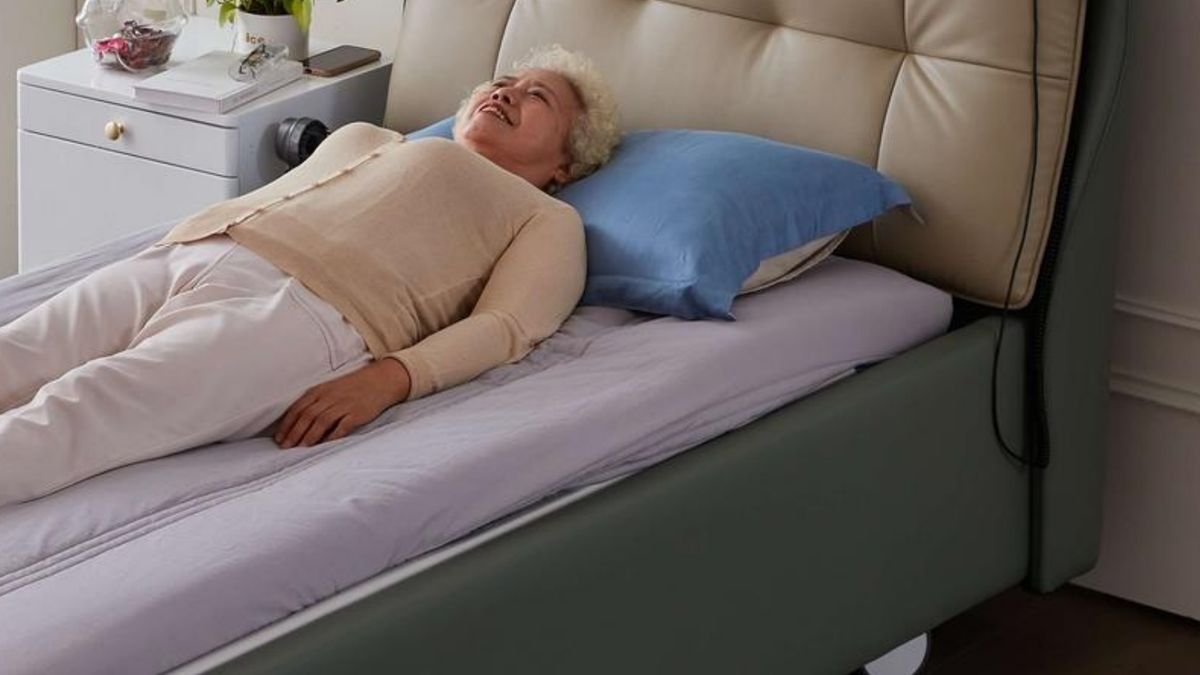


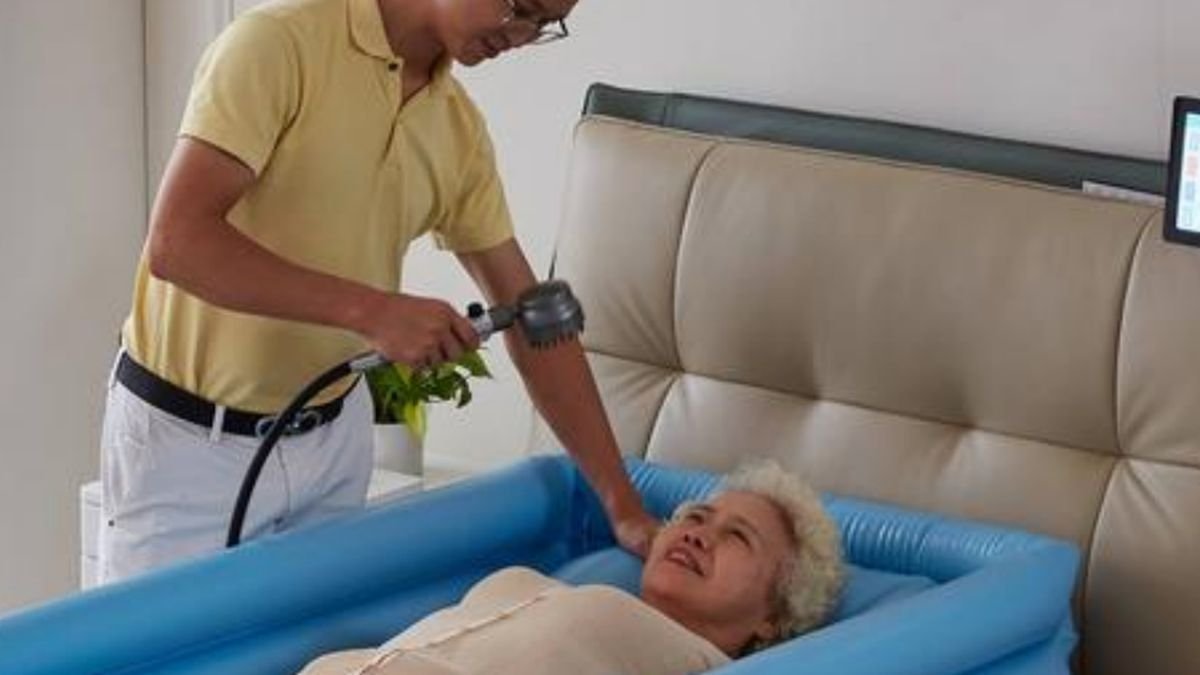
One practical requirement, stated plainly
The bed must be connected to a drain / sewer pipe, because waste is discharged into the sewer. There is no fixed distance or pipe-size requirement, and the final placement is checked at installation, based on where the bed will stand. Check the drain point before you order — it is the one thing that decides whether this kind of bed can work in a given bedroom. Also confirm the bed fits: 230 × 110 cm overall, height 58 cm, and a 220–240V~, 50Hz power supply for indoor use.
For nursing homes: the staffing angle
In a facility, incontinence care multiplied across many residents is a staffing question. Every toileting round that runs automatically is staff time freed for feeding, turning, conversation and observation — the parts of care that cannot be automated. When comparing beds for a facility, count the toileting rounds per resident per day and ask what each round costs in staff minutes; that is the honest way to compare a bedpan routine with an automatic system, and it is a question worth putting to any supplier, including us.
FAQ
Does the bed work at night without anyone awake?
Yes. Monitoring is automatic, 24 hours, and the cleaning, discharge and drying cycle runs on its own once use is detected.
Will there still be odour in the bedroom?
After cleaning, water is retained to seal the drain and prevent odour, and waste is discharged into the sewer rather than stored in the room.
Does it replace a caregiver?
No. It removes the toileting task. Skin checks, turning, meals and companionship still need a caregiver — the bed makes that care sustainable for one person at home.
Can the cleaning be adjusted for sensitive skin?
Yes. Water temperature, air temperature and cleaning time can be set to the user’s needs.
What does the bed need from my home?
A drain / sewer connection, a 220–240V~, 50Hz power supply, and enough room for a 230 × 110 cm bed. The final placement is checked at installation.
See the full model, specifications and test reports on the product page. For a quote, please email admin@chinahospitalbed.com with your country, quantity and intended use.