
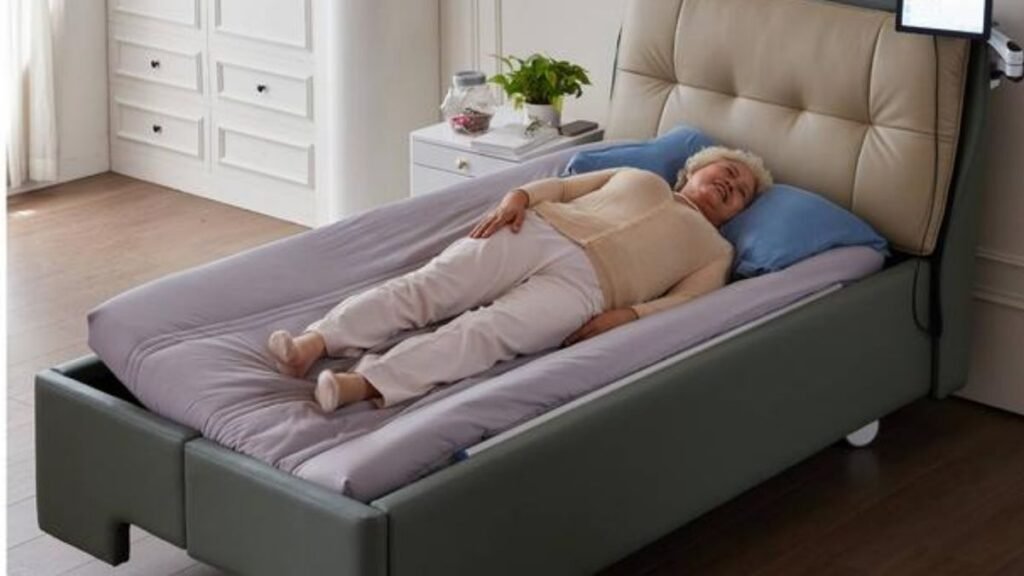
Preventing Pressure Ulcers at Home
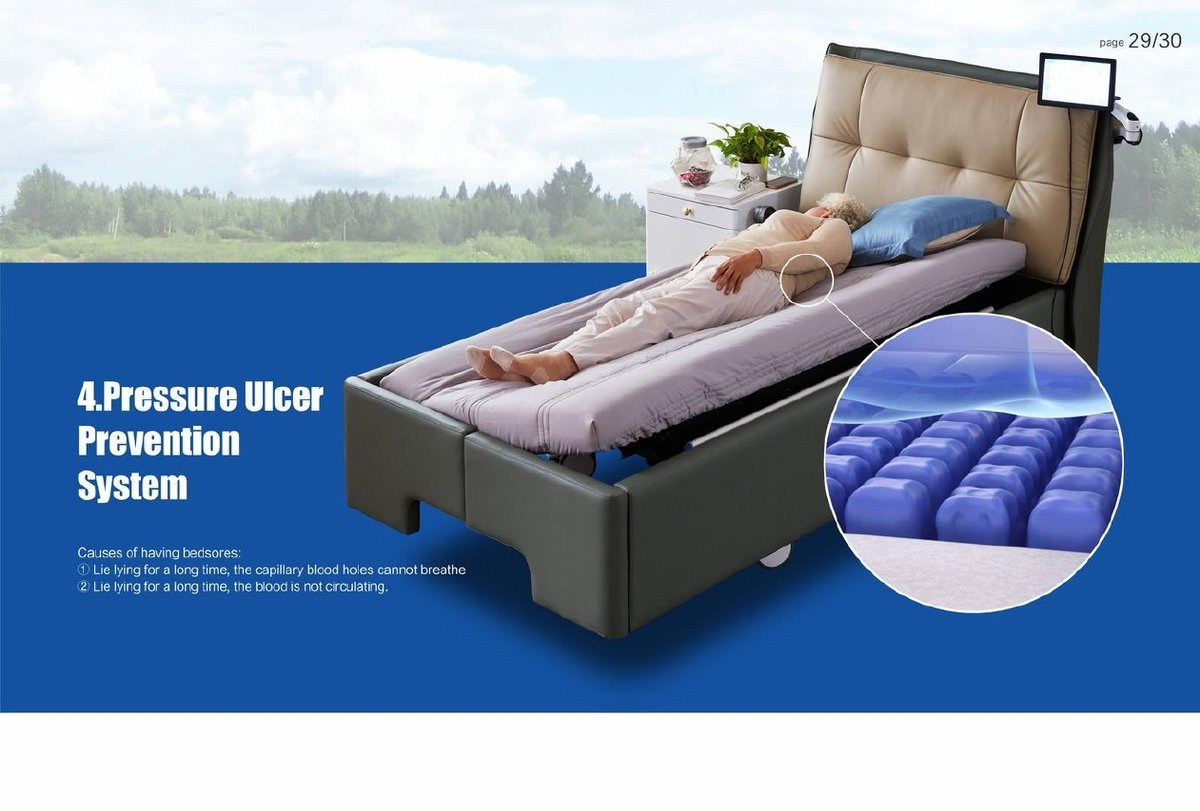
Pressure ulcers form when skin stays pressed in one position too long, and when skin stays damp. Prevention is a routine, not a single product: turn the body regularly (including at night), let the skin breathe with air supply and an air cushion, keep skin clean and dry after toileting, and check the skin every day. The CH-ENB-01 supports that routine with automatic left-right turning (preset total time and stay time), a wave massage air cushion, an automatic air supply system, and automatic cleaning and blow-drying after toileting. This article is general care information, not medical advice for an individual — if a sore has already formed, or if the person has diabetes, poor circulation or another risk condition, talk to a clinician about a personal care plan.
What a pressure ulcer is, in plain terms
A pressure ulcer — also called a bedsore — is skin damage caused by sustained pressure, usually over a bony area: heels, hips, shoulders, elbows and the lower back are the classic spots. Pressure squeezes the small blood vessels that feed the skin; without blood flow, the skin weakens and breaks down. Two things make it worse: dampness (from sweat or incontinence) and shearing (skin dragging when a person is pulled across a sheet). That is why prevention has three parts, not one: move the body, keep the skin dry, and move the body gently.
1. Turn regularly — and make it automatic if you can
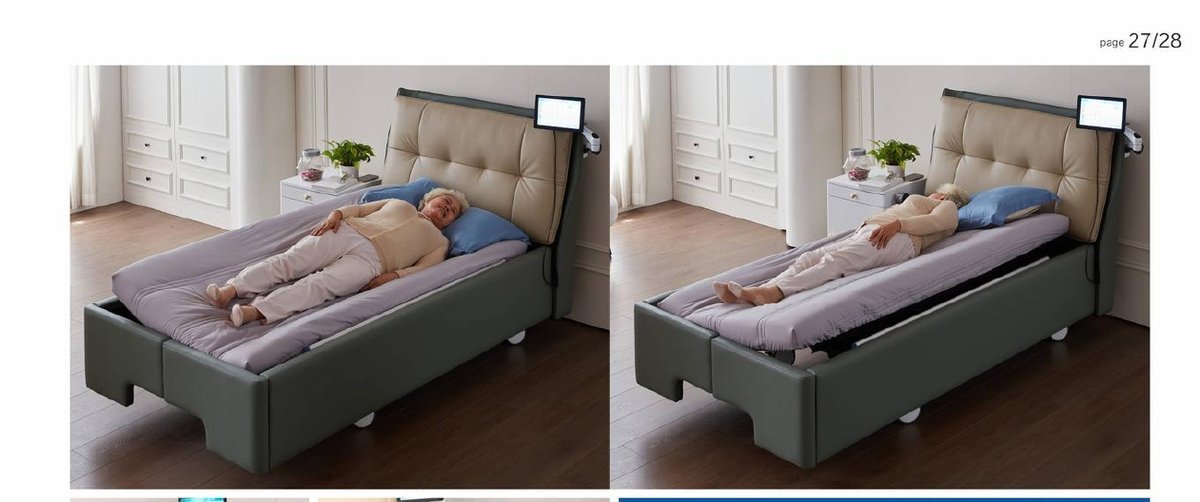
The single most important habit is repositioning. A body that lies in one position all day puts the same skin under pressure for hours. Turning left and right redistributes that pressure and lets blood flow back to the pressed area.
The hard part at home is not knowing this — it is doing it at 2 a.m. The CH-ENB-01 turns left and right, manually or automatically. Automatic turning can be set with a preset total time and stay time, so the body is moved on a schedule even at night, when a family caregiver is asleep. That does not replace checking the skin — it makes the schedule reliable, which is exactly where home routines usually fail.
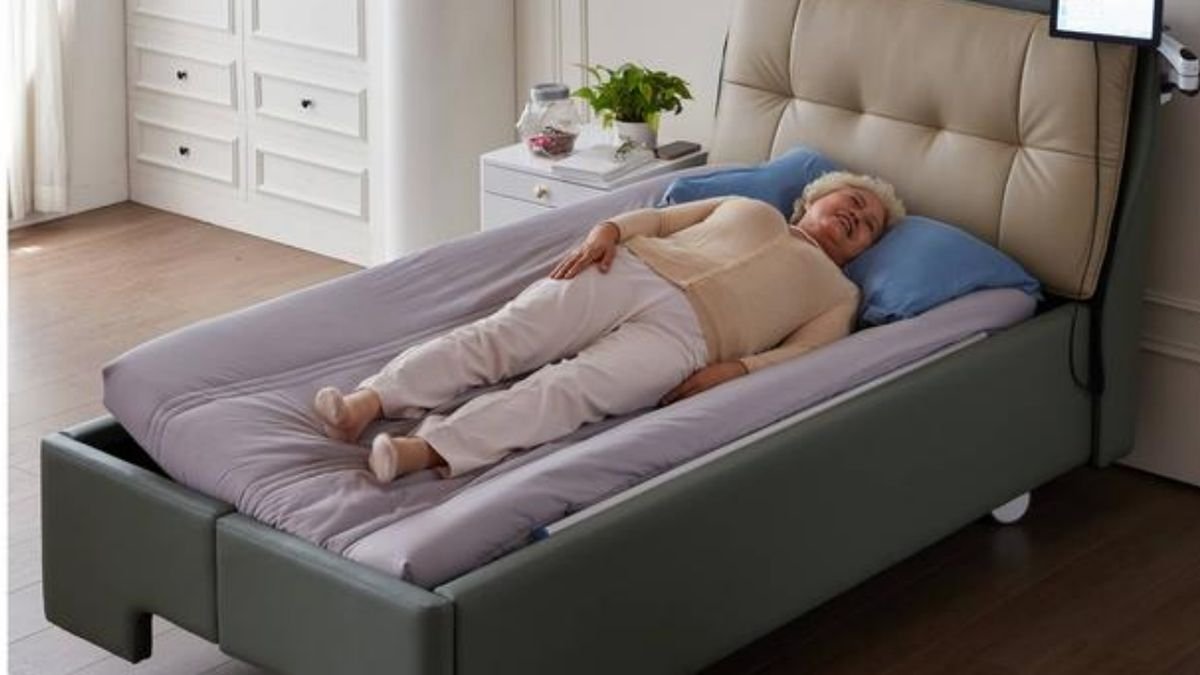

2. Let the skin breathe: air supply and a wave massage cushion
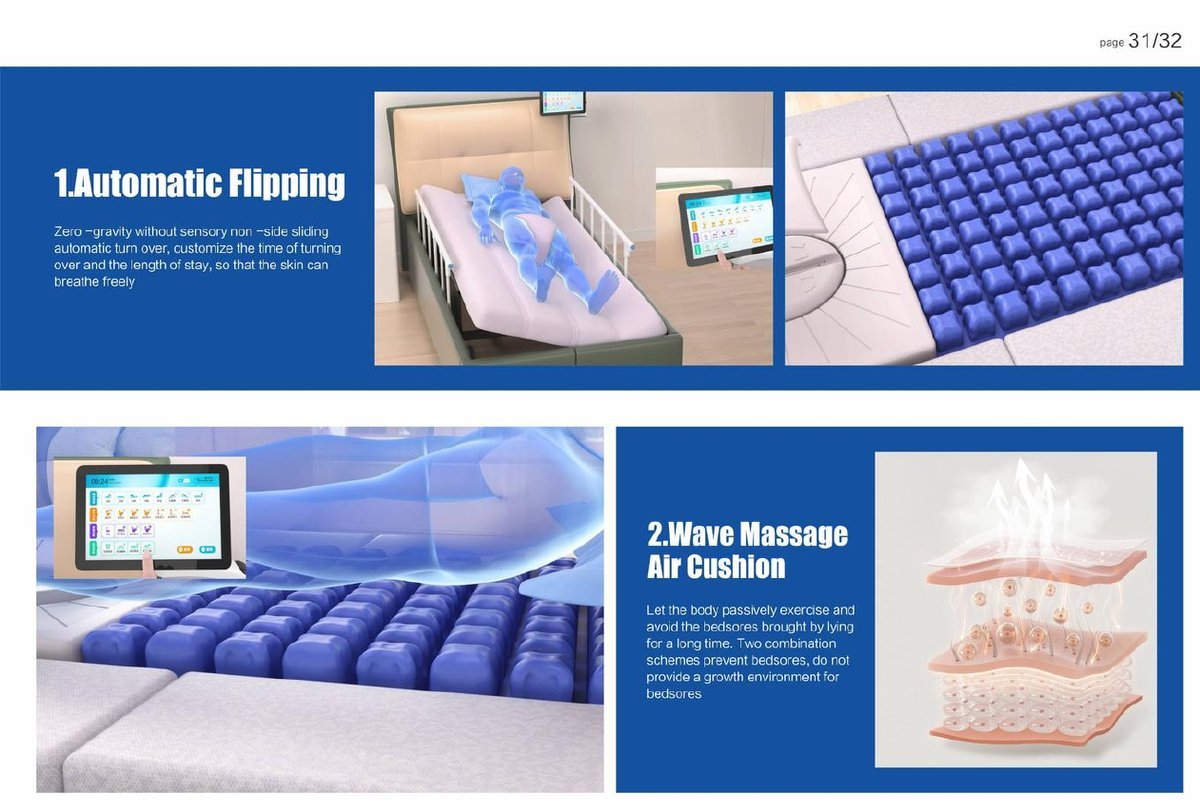
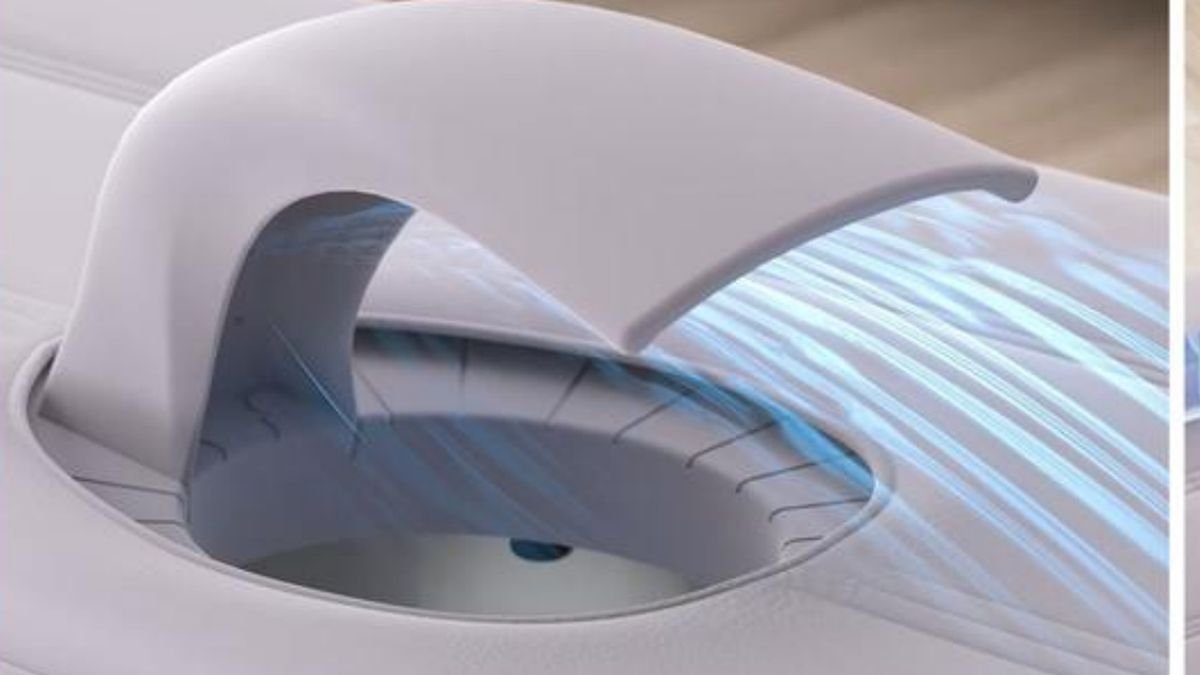
Damp, still skin breaks down faster. Two things help: air movement, and a surface that does not hold the body in exactly the same shape all day. The CH-ENB-01 combines automatic turning with a wave massage air cushion, so the body is moved regularly and the skin can breathe, instead of lying still in one position. An automatic air supply system keeps the body dry and exhausts stale air, and air supply intervals can be set to the user’s needs.
3. Keep skin clean and dry — toileting matters here too
Skin that is exposed to urine or stool breaks down much faster, which is why toileting care is part of pressure-ulcer prevention, not a separate job. A bed that cleans and blow-dries automatically after toileting, and discharges waste into the sewer, keeps the skin cleaner and drier than a routine based on bedpans and manual cleaning. The CH-ENB-01 monitors 24 hours, cleans with 6 wide-angle nozzles and blow-dries, so this part of skin care happens on its own, at night as well as during the day.
4. Who is at highest risk?
| Risk factor | Why it raises risk | What helps most |
|---|---|---|
| Cannot move or turn alone | Same skin stays pressed for hours | Automatic turning on a schedule |
| Incontinence | Skin stays damp and exposed | Automatic cleaning and drying after toileting |
| Poor circulation or diabetes | Skin heals slowly and damages easily | Daily skin checks, early clinician advice |
| Low body weight | Less padding over bony areas | Turning, air cushion, gentle handling |
| Damp bedding or sweating | Moisture softens skin | Air supply, prompt linen changes |
If several rows apply to the same person, the routine matters more, not less — and a clinician should be involved in the care plan.
5. A daily routine that anyone can follow
Morning. Check the skin, especially heels, hips, shoulders and the lower back. Look for redness that does not fade, blisters, or broken skin, and tell a clinician early — early redness is far easier to deal with than an open sore. Sit the person up for breakfast: the CH-ENB-01 backrest adjusts from 0 to 85°, and one-click sitting makes feeding, chatting and foot washing easier, which also changes pressure points during the day.
During the day. Keep turning on schedule, even when the person says they feel fine — pressure damage often starts before pain is felt. Keep the skin clean and dry, and change bedding promptly if it becomes damp.
At night. Let automatic turning and automatic toileting carry the routine. Check the skin again in the morning, and note any new redness so it can be watched or shown to a clinician.
6. Warning signs to act on early
- Redness over a bony area that does not fade after pressure is removed.
- Blistering, peeling or broken skin.
- A spot that feels warmer, cooler, firmer or softer than the skin around it.
- Pain or tenderness in one spot that was not there before.
Any of these means: tell a clinician, do not wait for it to improve on its own, and keep pressure off that area in the meantime.
7. What a bed can and cannot do
A turning bed and an air cushion help prevent pressure ulcers by moving the body and letting the skin breathe — they do not treat an existing ulcer, and they do not replace nutrition, hydration, or clinical care. Think of the bed as the tool that makes the routine possible for one caregiver at home, day and night, rather than as a cure on its own.
FAQ
How often should a bedridden person be turned?
Regularly, on a schedule, including at night. Automatic turning with a preset total time and stay time makes that schedule reliable for a family caregiver.
Does an air cushion replace turning?
No. Turning and an air cushion work together: turning redistributes pressure, and the cushion and air supply help the skin breathe. Both are needed.
Can a bed help if a sore has already formed?
A bed can support the care routine, but an existing sore needs clinical assessment. Talk to a clinician about a personal care plan.
Does incontinence care really affect pressure ulcers?
Yes. Skin exposed to urine or stool breaks down faster, and damp skin is more vulnerable to pressure damage. Automatic cleaning and drying after toileting is part of prevention, not a separate luxury.
What is the first thing to do if I see redness that does not fade?
Keep pressure off that area and tell a clinician promptly. Early redness is far easier to deal with than an open sore.
See the full model, specifications and test reports on the product page. For a quote, please email admin@chinahospitalbed.com with your country, quantity and intended use.