
How an Automatic Toilet Bed Works
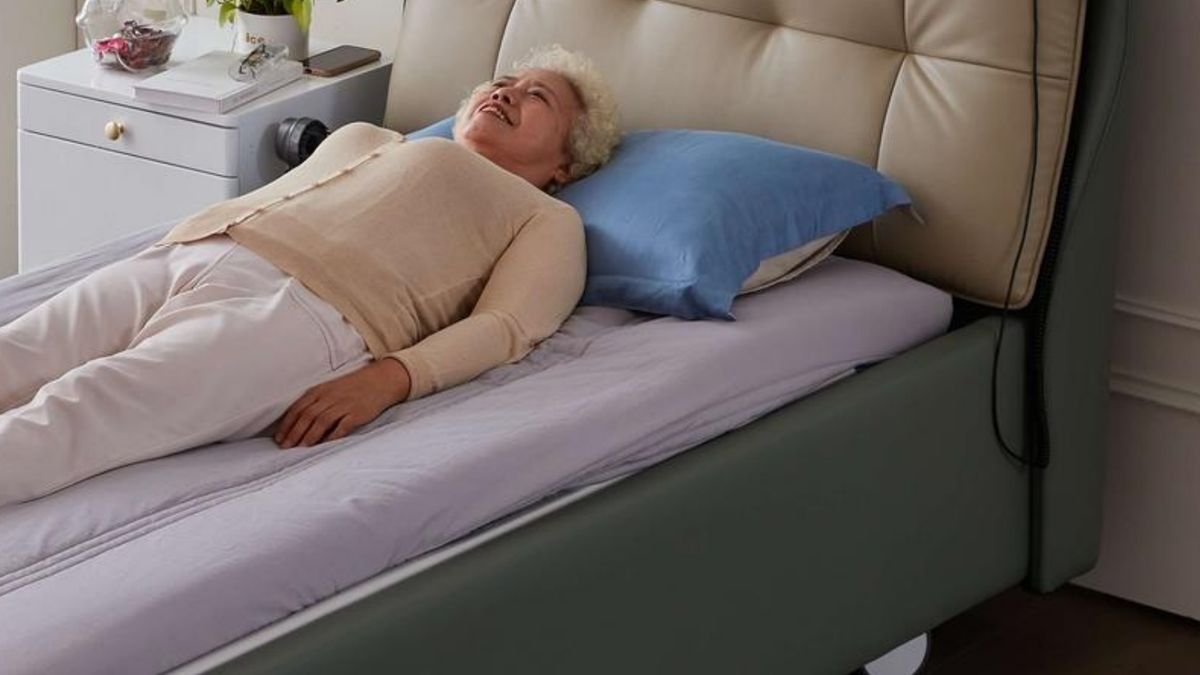
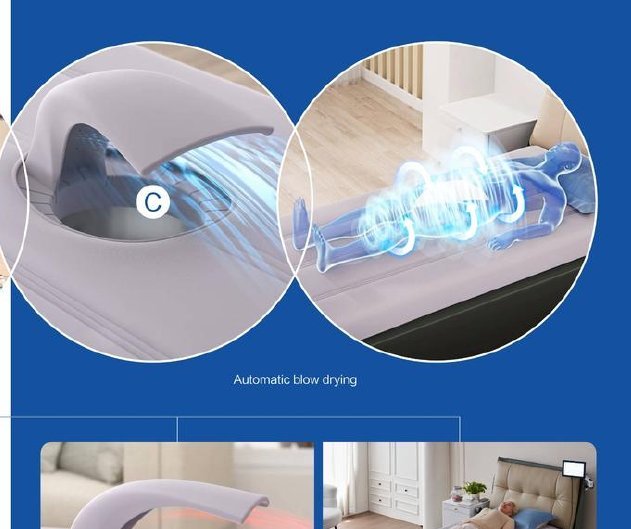
An automatic toilet bed handles toileting inside the bed, without a bedpan and without lifting. On the CH-ENB-01, the cycle is: 24-hour automatic monitoring detects use; the bedpan door opens in 1 second; 6 wide-angle nozzles clean 360°; waste is crushed and discharged into the sewer; the body is blow-dried. Water temperature, air temperature and cleaning time can be set to the user’s needs. The bed must be connected to a drain / sewer pipe, and the final placement is checked at installation.
Why toileting is the task that decides everything else
For a bedridden person, toileting is not a small detail. It happens several times a day, often at night, and every time it usually means lifting, a bedpan, cleaning, and laundry — for the patient, a loss of privacy; for the caregiver, the heaviest and most tiring job in the day. Families often discover this only after the bed is already home: the bed is comfortable, the backrest works, but three times a night someone still has to get up for a bedpan. That is why toileting deserves to be the first question when choosing a bed, not an afterthought.
The cycle, step by step
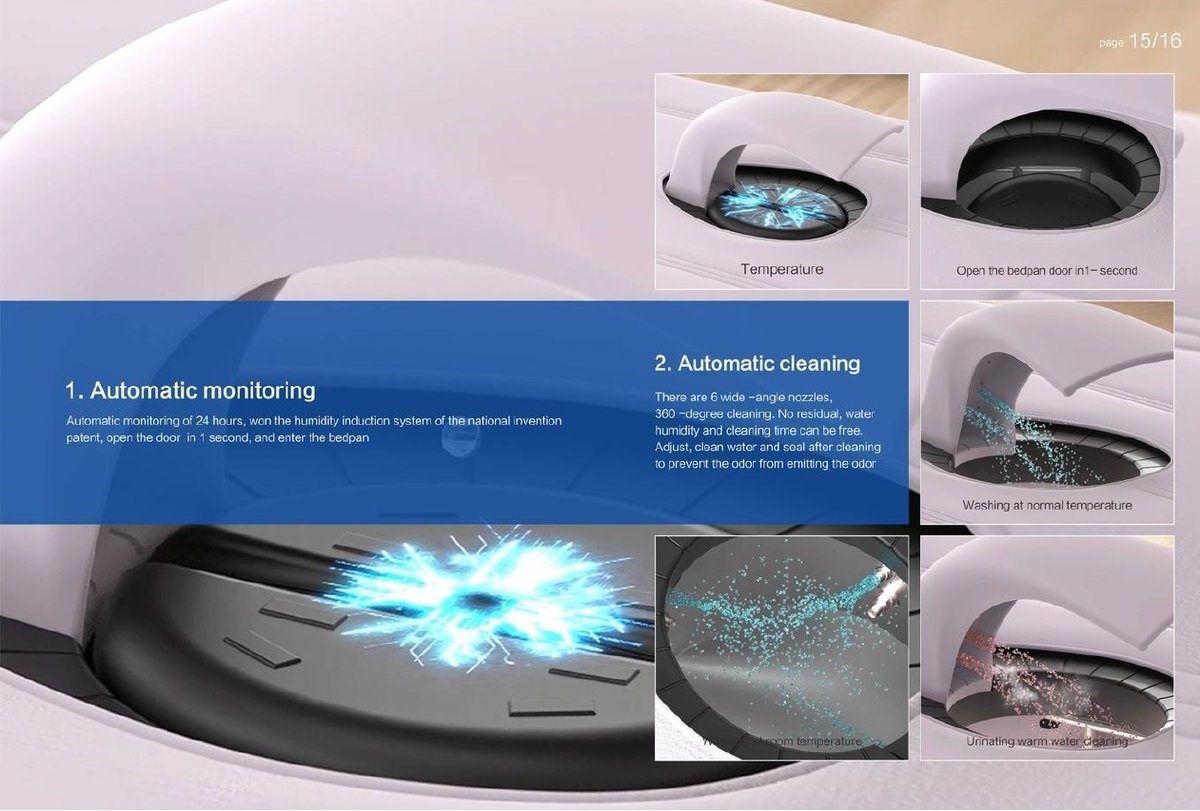
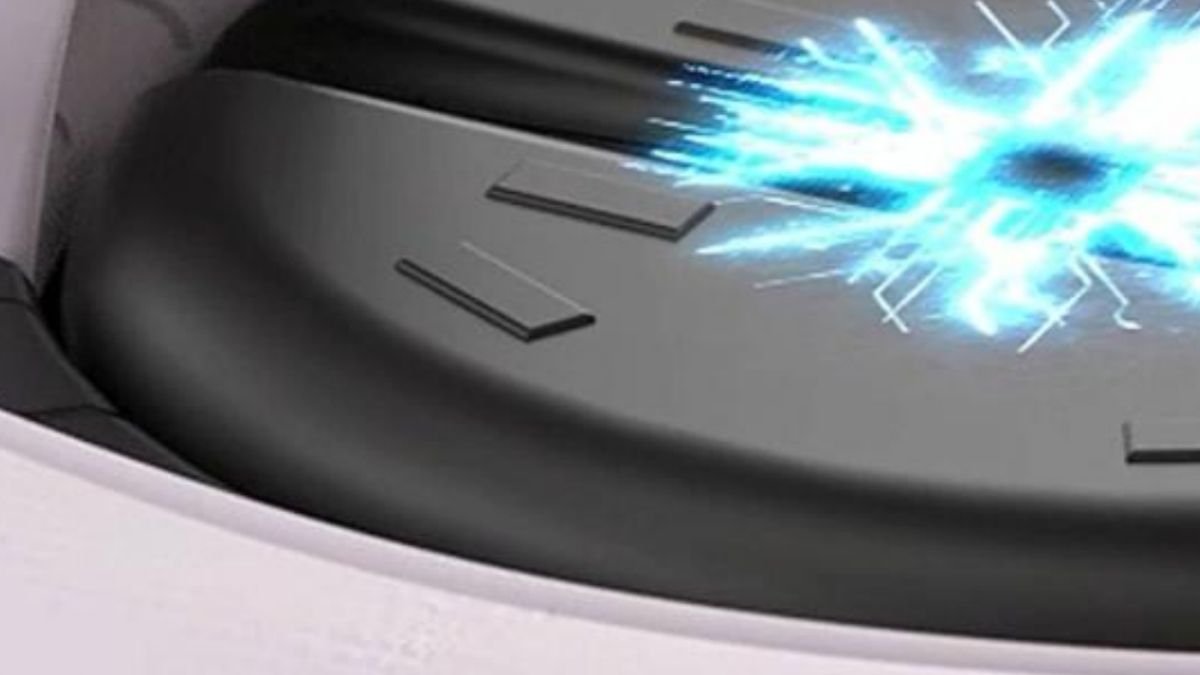
Step 1: It monitors, day and night.
The bed monitors automatically around the clock. When use is detected, the system starts on its own — the caregiver does not have to watch the clock or guess when help is needed, and the patient does not have to call out or wait.
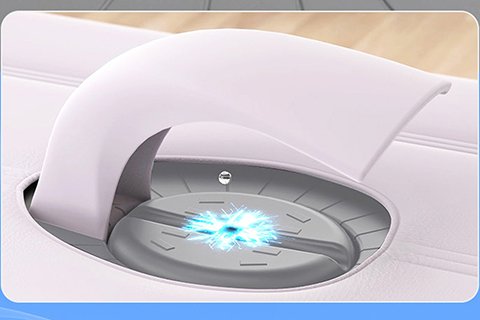
Step 2: The bedpan door opens in 1 second.
When use is detected, the bedpan door opens in 1 second. That speed matters more than it sounds: a long wait is uncomfortable and undignified, and a fast, predictable opening keeps the routine calm for both sides.
Step 3: Cleaning with 6 wide-angle nozzles, 360°.
After use, 6 wide-angle nozzles clean 360°. Water temperature, air temperature and cleaning time can all be set to the user’s needs from the control panel, which also has a child lock and a self-check screen. Cleaning is not a quick rinse — it is a full, adjustable wash.
Step 4: Waste is crushed and discharged into the sewer.
Waste is crushed and discharged into the sewer automatically. After cleaning, water is retained to seal the drain and prevent odour, so waste is never seen and never handled.
Step 5: Blow-drying, and the routine is done.
After cleaning, the body is blow-dried automatically. Air temperature and drying can be set by the user. When the cycle ends, the bed is ready again — no bedpan to empty, no linen to change because of toileting, no night-time lifting for this task.
A night with and without an automatic toilet bed
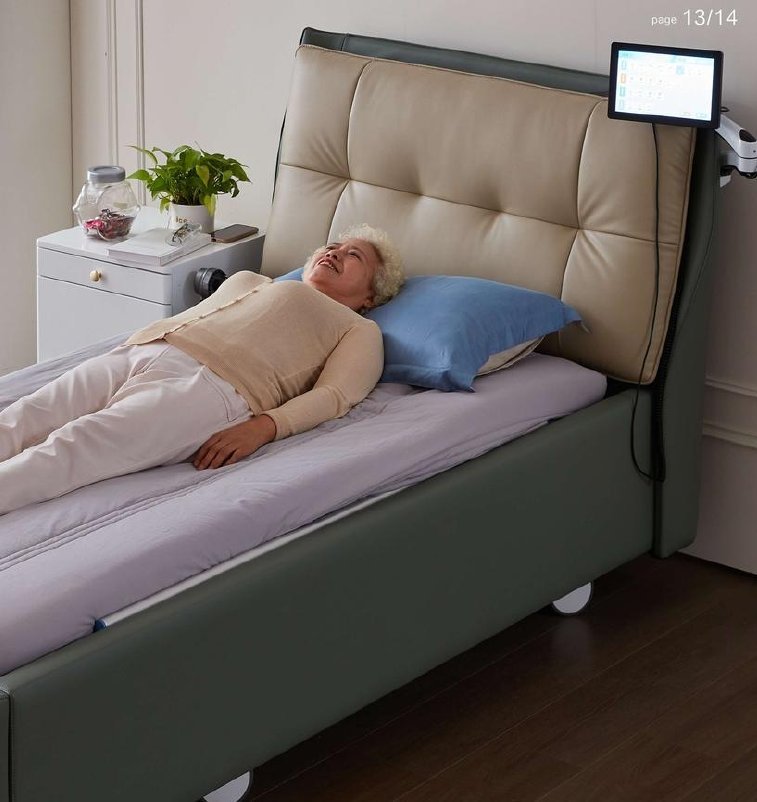
| Without automatic toileting | With the CH-ENB-01 | |
|---|---|---|
| Night-time toileting | Caregiver gets up, lifts, uses a bedpan, cleans, changes linen | Cycle runs on its own: monitoring, cleaning, discharge, drying |
| Privacy | Patient must call for help and wait | Use is detected automatically, door opens in 1 second |
| Odour and waste in the room | Bedpan and soiled linen stay in the room until cleaned | Waste goes to the sewer; retained water seals the drain against odour |
| Skin after toileting | Depends on how quickly and thoroughly someone cleans by hand | Cleaning and blow-drying run the same way every time |
Who benefits most
- People who are fully bedridden — after a stroke, with advanced Parkinson’s, spinal injury, or late-stage illness — for whom every transfer to a commode is painful or risky.
- People with dementia who cannot reliably call for help or wait for it.
- Single family caregivers, for whom night-time toileting is the task most likely to break their sleep and their health over months.
- Nursing homes, where toileting workload across many residents decides staffing, hygiene and skin-care outcomes.
The rest of the bed matters too
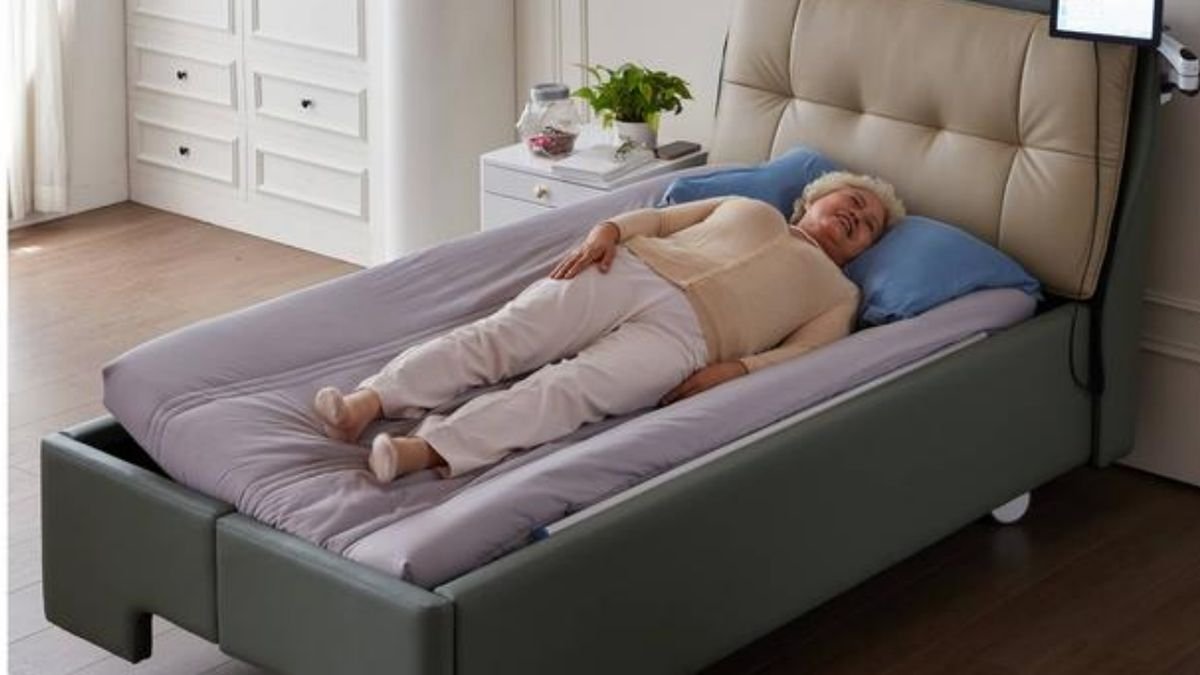
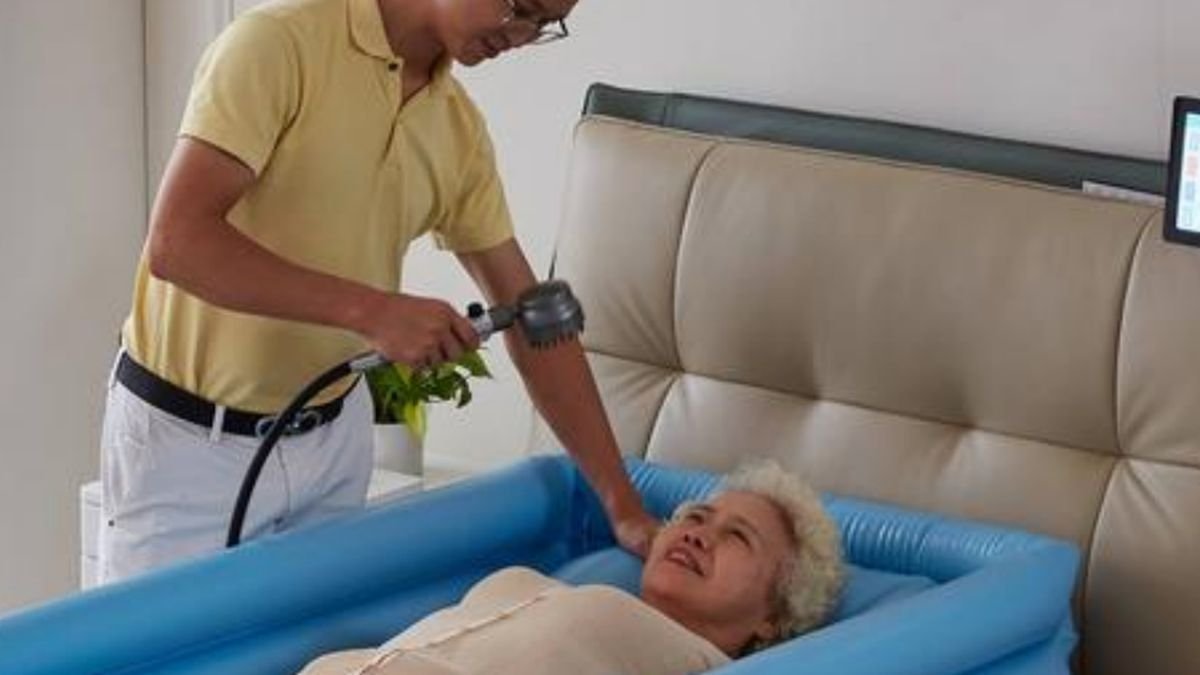
Toileting is the headline, but a bed that only does toileting still leaves turning, bathing and positioning to manual work. The same CH-ENB-01 also adjusts its backrest from 0 to 85°, turns left and right manually or automatically, and lets one person bathe the user in bed with the included inflatable bath tub. The control panel includes a child lock and a self-check screen, and the power rating is 220–240V~, 50Hz, for indoor use.
What an automatic toilet bed does not do
It does not remove the need for care. Skin still needs checking every day, the body still needs turning, and the bed still needs its drain connection and power supply. What it removes is one specific, repeated, heavy task — toileting — and it does that task the same way every time, day and night. Families should also know the one installation rule before ordering: the bed must be connected to a drain / sewer pipe. There is no fixed distance or pipe-size requirement, and the final placement is checked at installation, based on where the bed will stand.
Before you order: installation checklist
- Is there a drain / sewer point in or near the bedroom?
- Can the bed (230 × 110 cm, height 58 cm) fit through the doorway and stand where the drain can reach it?
- Is there a 220–240V~, 50Hz power supply for indoor use?
- Who will do the installation check, and what do they need to see on the day?
FAQ
Does it work at night without a caregiver awake?
Yes. Monitoring is automatic, 24 hours, and the cleaning, discharge and drying cycle runs on its own once use is detected.
Does it need a floor drain?
Yes. The bed must be connected to a drain / sewer pipe. There is no fixed distance or pipe-size requirement; the installer checks the placement when the bed is installed.
Is the water temperature adjustable?
Yes. Water temperature, air temperature and cleaning time can be set to the user’s needs.
Does it replace a bedpan completely?
For toileting in bed, yes: waste is crushed and discharged into the sewer, and the body is cleaned and dried in the bed. No bedpan is used in this routine.
What happens if the power goes out?
The bed runs on 220–240V~, 50Hz. Like any powered bed, its automatic functions need power; discuss backup arrangements with the supplier if power cuts are common in
See the full model, specifications and test reports on the product page. For a quote, please email admin@chinahospitalbed.com with your country, quantity and intended use.