
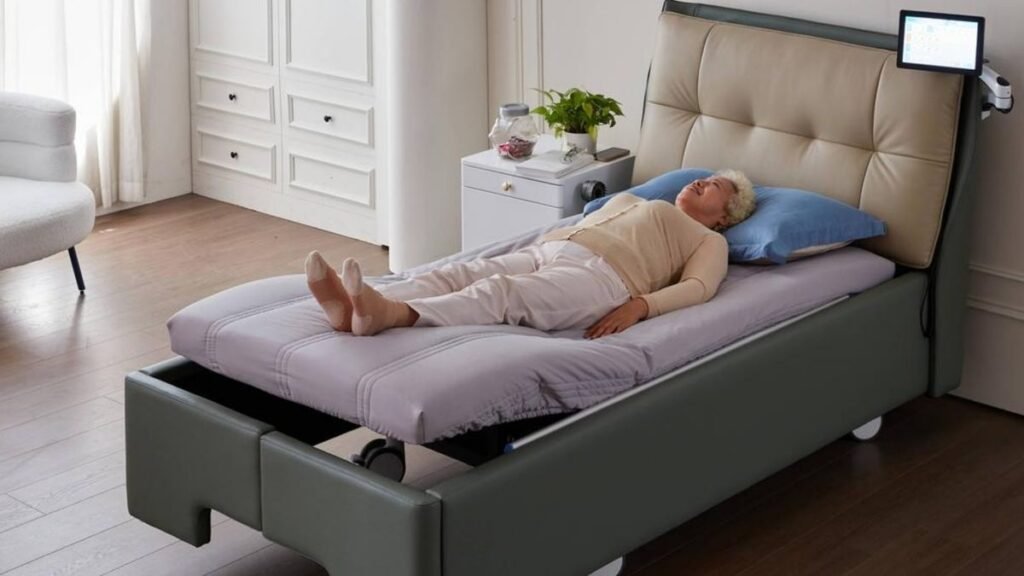
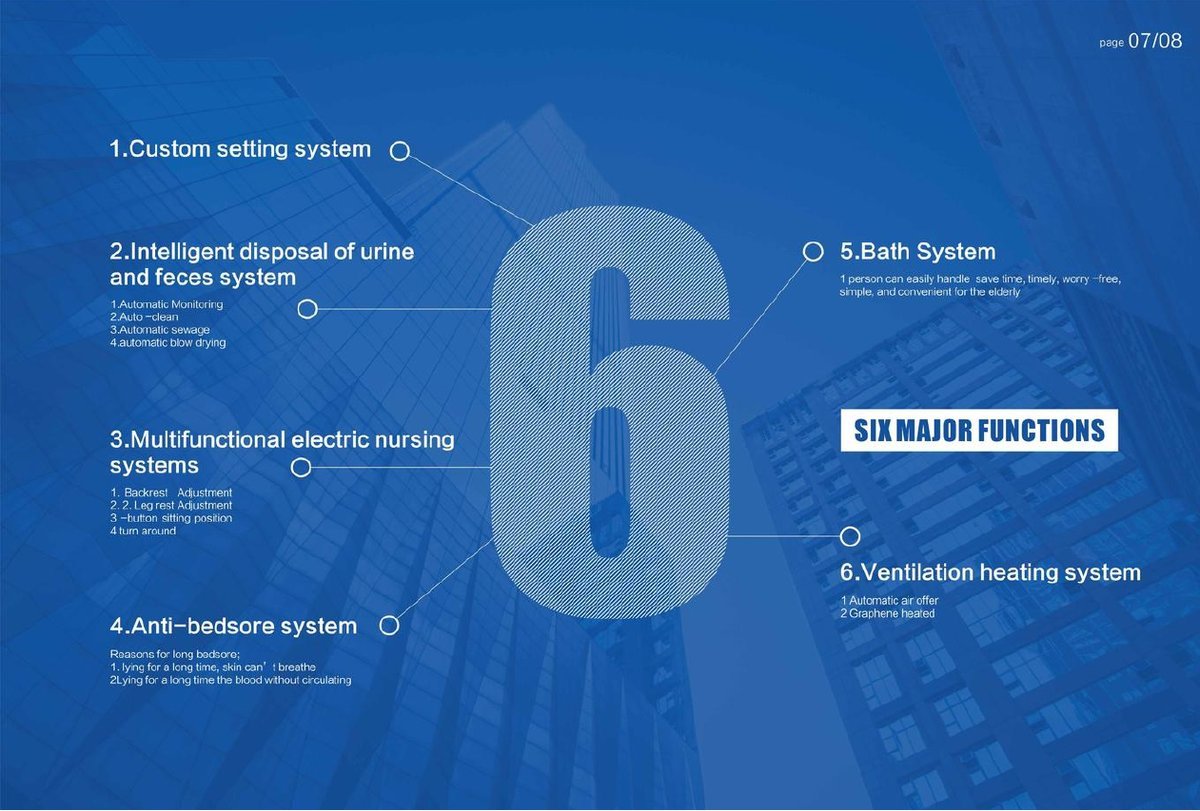
A good home hospital bed is chosen by care need first, not by feature count. For long-term bed care, the deciding factors are: automatic toileting (so no bedpan and no night-time lifting for this task), regular turning, a backrest that reaches a real sitting position, in-bed bathing, and a size and drain connection that fit the room. The CH-ENB-01 smart nursing bed covers all five: 24-hour automatic monitoring, a bedpan door that opens in 1 second, 6 nozzles cleaning 360°, left-right turning, a 0–85° backrest, an included inflatable bath tub, and an overall size of 230 × 110 cm. It must be connected to a drain / sewer pipe.
1. Start with the care need, not the feature list
Every bed brochure lists functions. The buyer’s job is to translate them into a day. Write down who will use the bed, how many hours a day they spend in it, and which daily tasks are hardest today: turning, toileting, bathing, feeding, getting in and out of bed, and night-time care. Then judge every bed against that list.
Three situations cover most buyers:
- Home care by one family member. The binding constraint is workload: one person must do everything, including at night. Automatic toileting and automatic turning matter more here than anywhere else.
- A nursing home or care facility. The binding constraints are hygiene, staff time per resident, and skin care across many residents. Drainage, cleaning and turning routines matter most.
- A distributor or importer. The binding constraints are configuration, certification documents, and installation conditions in the destination country. Ask for the test reports and the installation requirements before discussing price.
2. Positioning: backrest, legs, turning and sitting
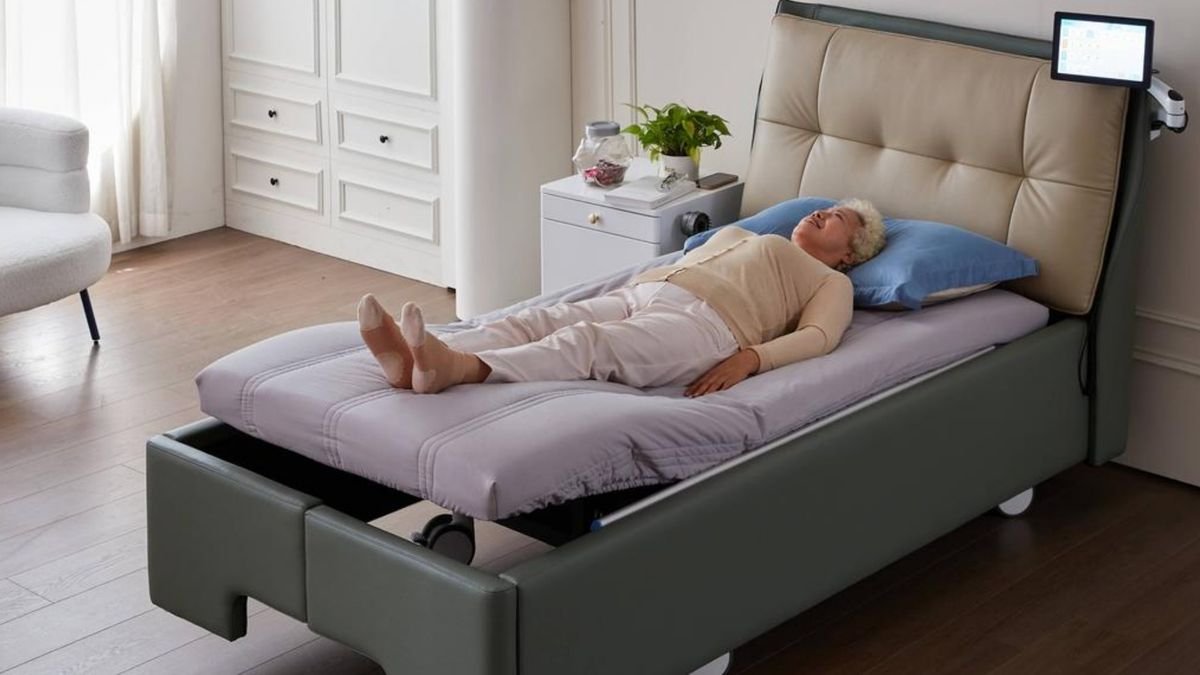
Positioning is the daily workhorse of any nursing bed, and it is where cheap beds disappoint first. Check four things:
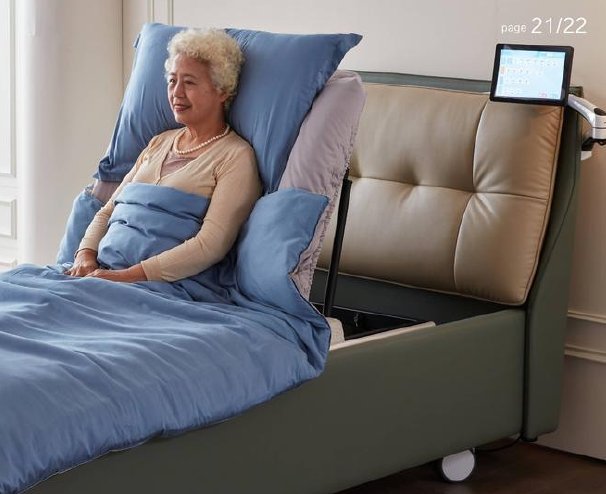
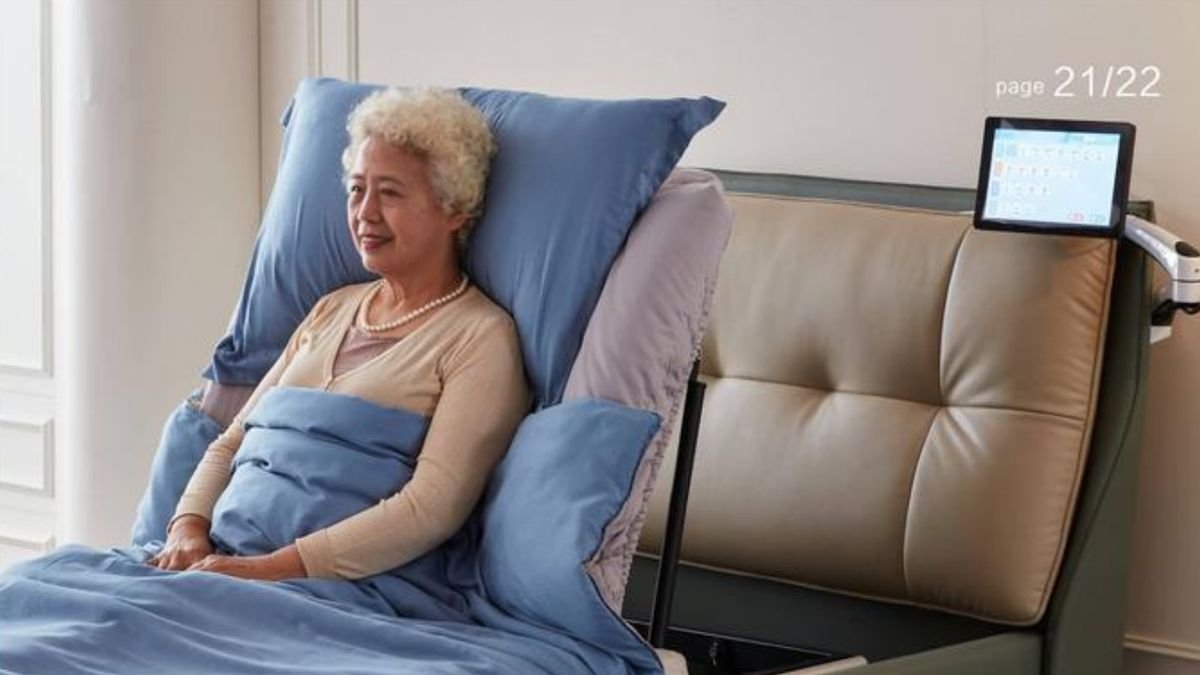
- Backrest range. A backrest that only rises a little is not a sitting position. The CH-ENB-01 backrest adjusts from 0 to 85°, so the user can sit up properly for meals, conversation and foot washing.
- Leg rest. A raised leg rest changes pressure points and makes leg care easier.
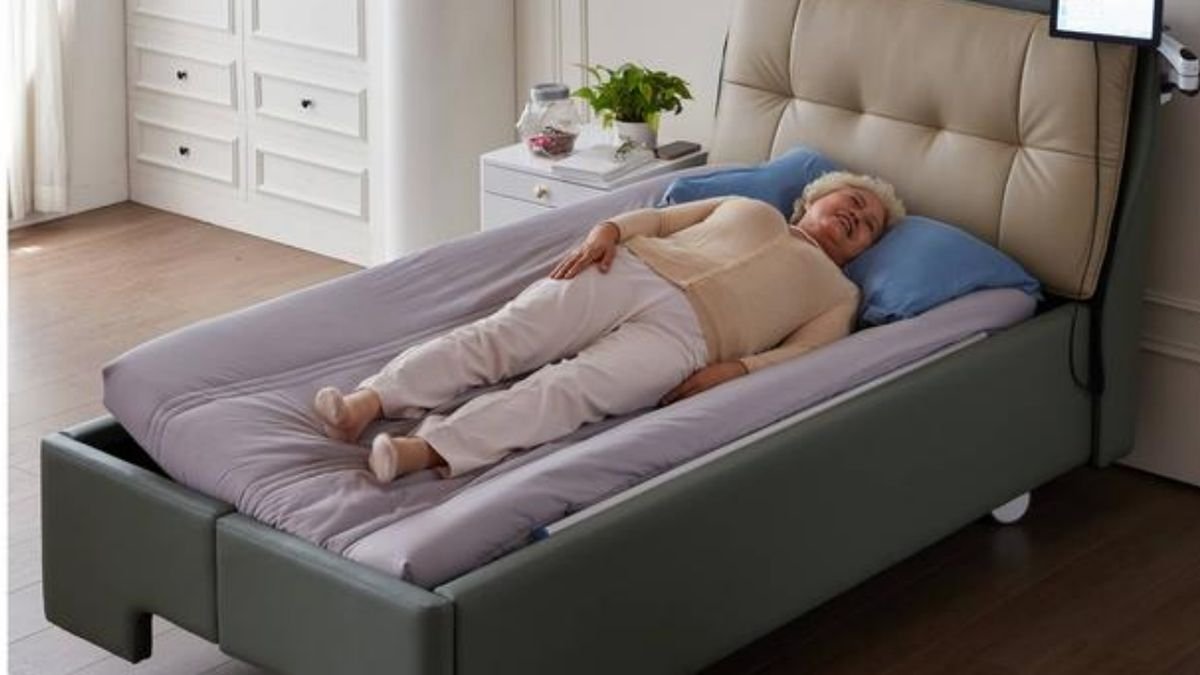
- Turning. Turning left and right redistributes pressure and is a core part of pressure-ulcer prevention. The CH-ENB-01 turns manually or automatically, with a preset total time and stay time, so the schedule keeps running at night.
- One-click sitting. A single control that moves the bed into a sitting position saves repeated manual adjustment several times a day.
3. How toileting works — this is where beds differ most
Most beds leave toileting to a bedpan, a commode or a catheter. A bed with an automatic toileting system changes the whole routine:
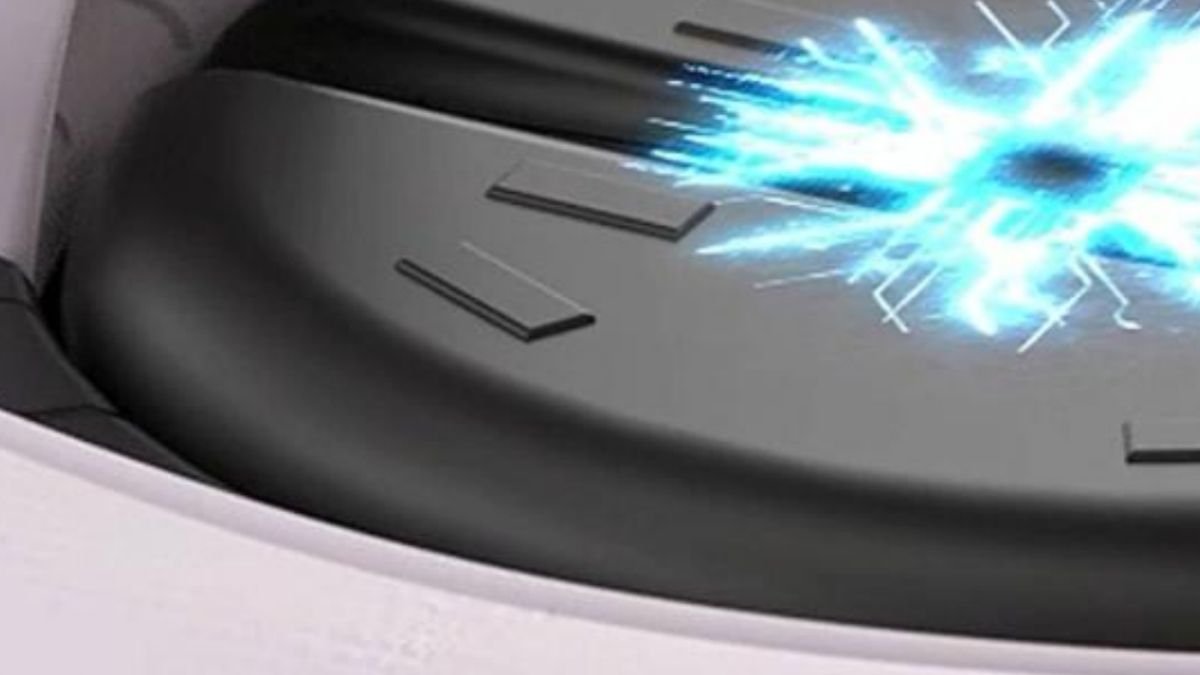
- It monitors automatically, 24 hours, and starts on its own when use is detected.
- The bedpan door opens in 1 second.
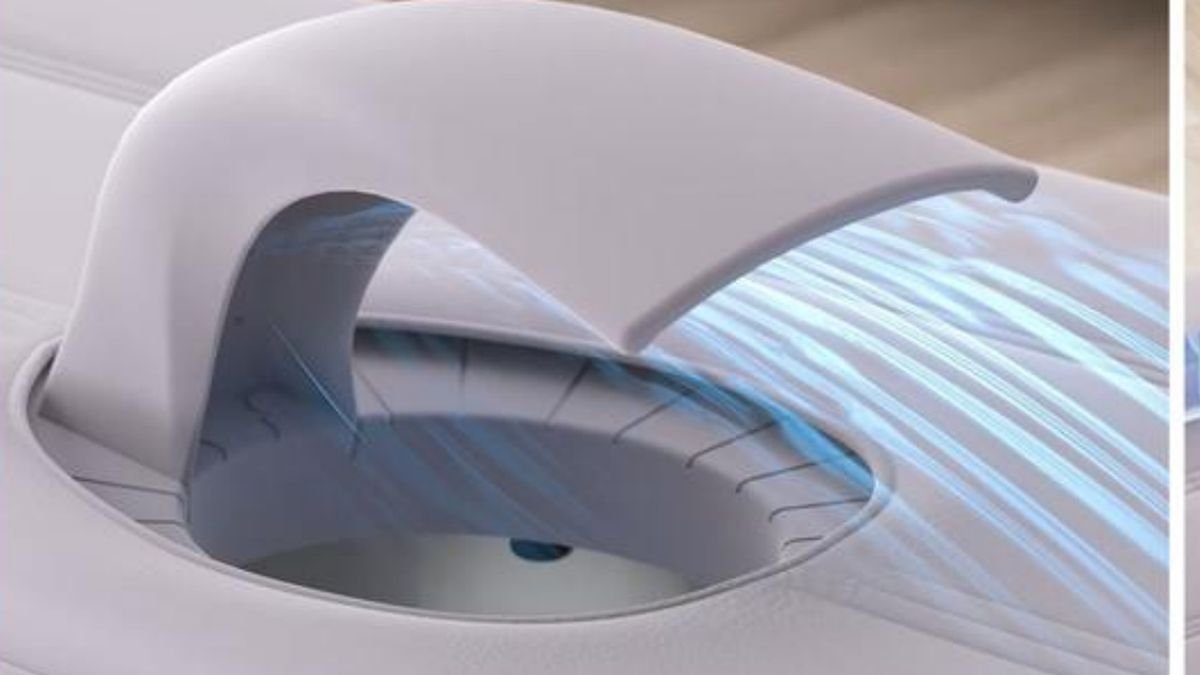
- Six wide-angle nozzles clean 360°. Water temperature, air temperature and cleaning time can be set to the user’s needs.
- Waste is crushed and discharged into the sewer. After cleaning, water is retained to seal the drain and prevent odour.
- The body is blow-dried automatically.
Ask any supplier the same three questions: does it need a floor drain, does it clean and dry by itself, and what happens at night when no caregiver is awake? For the CH-ENB-01, the answers are: yes, it must be connected to a drain / sewer pipe; yes, cleaning, discharge and drying are automatic; and yes, monitoring runs 24 hours, so the cycle runs on its own at night. There is no fixed distance or pipe-size requirement; the final placement is checked at installation.
4. Bed types compared
| Type | What it does well | Where it falls short | Best for |
|---|---|---|---|
| Manual bed | Low cost, simple, no power needed | Every adjustment needs a caregiver’s hands; no automatic toileting or turning | Short-term recovery, tight budget |
| Standard electric bed | Backrest and height adjust at a button | Toileting still means a bedpan; turning still manual | Users who mainly need positioning |
| Smart nursing bed with automatic toileting (e.g. CH-ENB-01) | Toileting, turning, bathing and positioning in one bed; night-time workload drops sharply | Needs a drain connection and a power supply (220–240V~, 50Hz, indoor use); needs an installation check | Long-term bed care at home or in a facility |
This table is a qualitative comparison, not a price comparison: prices depend on configuration, quantity and destination, and are confirmed by enquiry.
5. Measure the room, and check installation before you order
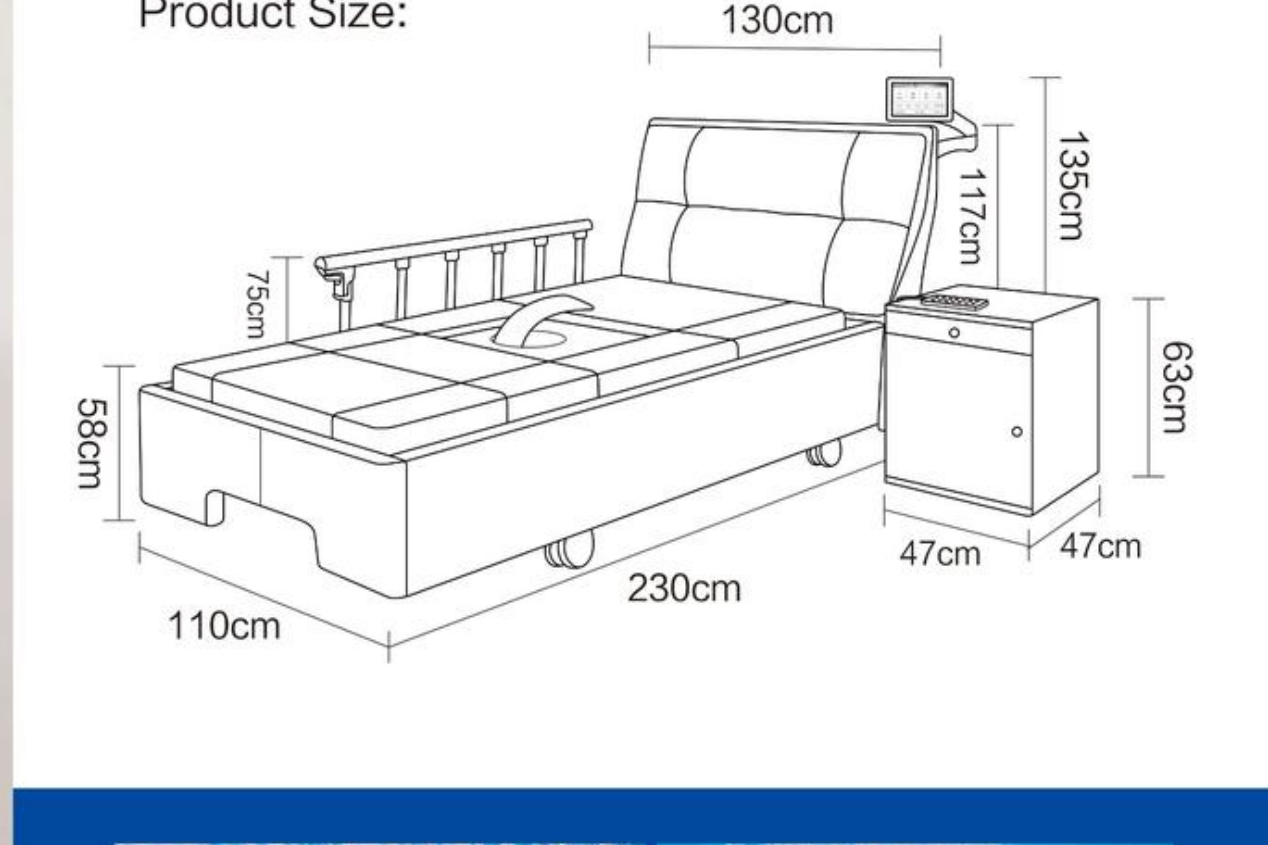
A bed that does not fit the room, the doorway or the drain point is a problem you discover too late. The CH-ENB-01 measures 230 × 110 cm overall, with a bed height of 58 cm and a bedside cabinet of 47 × 47 cm, height 63 cm. Before ordering, measure:
- The bedroom, and the space around the bed for a caregiver to work on both sides.
- The doorway and corridor the bed must pass through on delivery day.
- The distance to the nearest drain point, and confirm the installation check with the supplier.
6. Bathing, skin care and the details that add up
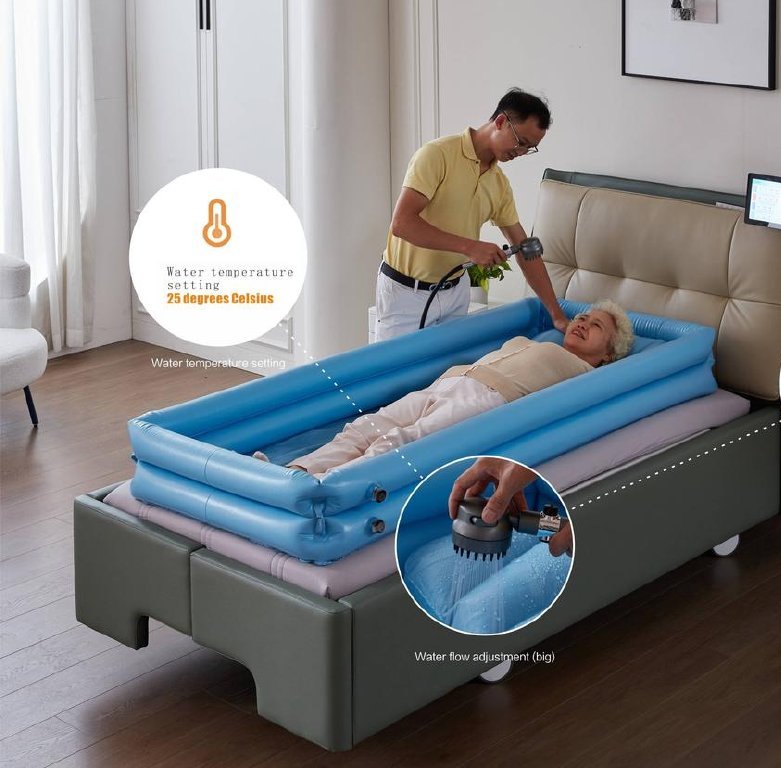
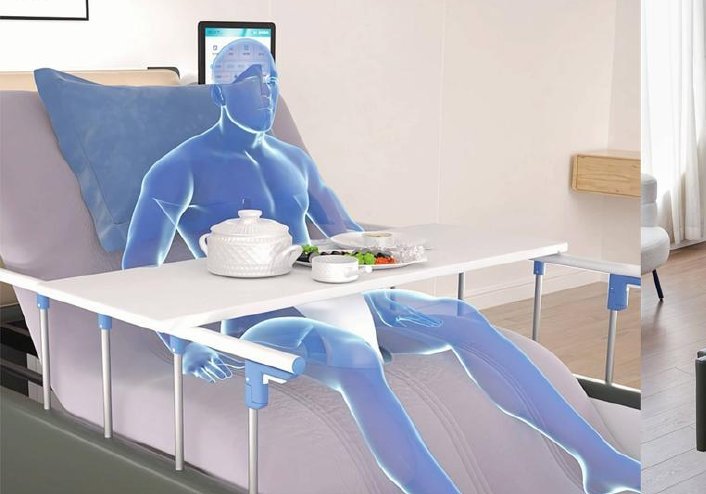
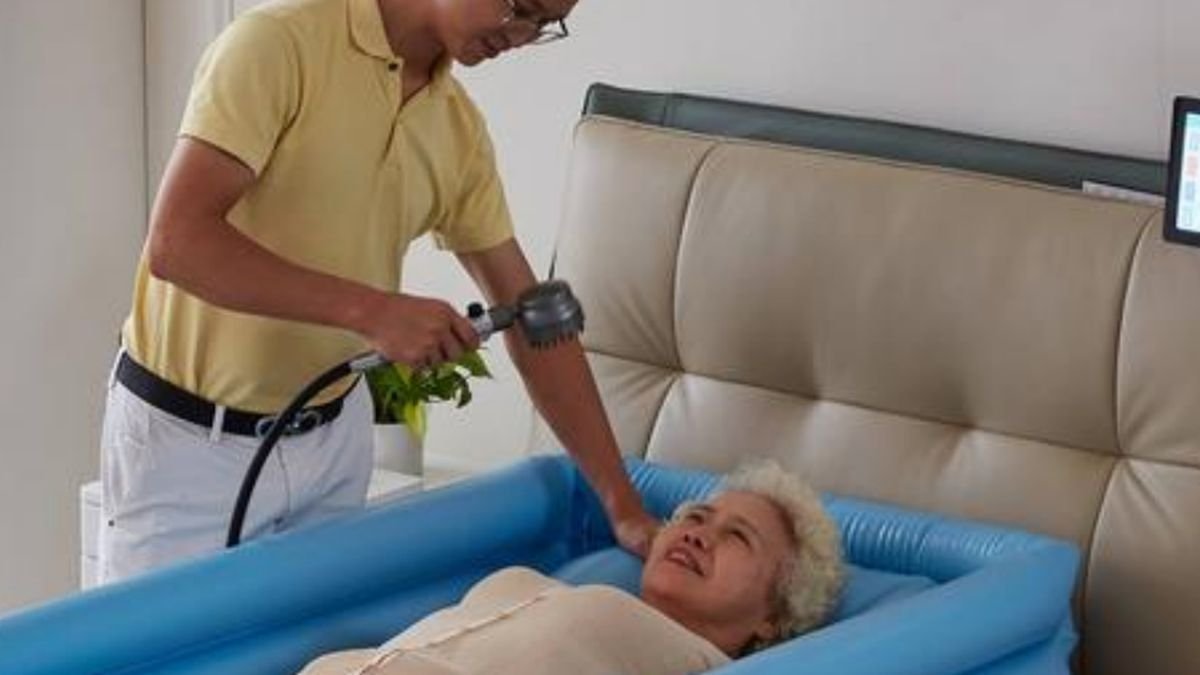
Bathing a bedridden person is often the hardest single task in the week. The CH-ENB-01 includes an inflatable bath tub as standard, so one person can bathe the user in bed with a handheld shower, and bathing wastewater is discharged into the sewer automatically. For skin care, automatic turning works together with a wave massage air cushion so the skin can breathe, and an automatic air supply system keeps the body dry. Graphene heating, a shifting machine and a dining table board are optional accessories, not included by default — confirm the configuration in your enquiry, so the quote matches what you actually want.
7. Checklist: questions to ask before you buy
- Who will use the bed, and which daily tasks are hardest today?
- Does toileting work automatically, and does the bed need a drain connection?
- What are the overall size and bed height, and will they fit the room and doorway?
- Is in-bed bathing included as standard, or is it an optional extra?
- What is included as standard, and what is optional — graphene heating, shifting machine, dining table board?
- What test reports and certificates can the supplier share?
- What do I need to send to get a price, delivery and installation plan? For the CH-ENB-01, send your country, quantity, intended use (home, nursing home or distributor) and expected time.
FAQ
Does the CH-ENB-01 need a floor drain?
Yes. It must be connected to a drain / sewer pipe so waste can be discharged after crushing. There is no fixed distance or pipe-size requirement; the installer checks the placement when the bed is installed.
Is in-bed bathing included?
Yes. The inflatable bath tub is included as standard. Graphene heating, the shifting machine and the dining table board are optional accessories.
What is the difference between a standard electric bed and a smart nursing bed?
A standard electric bed adjusts position at a button. A smart nursing bed adds automatic toileting, automatic turning and in-bed bathing, so it takes over routine care tasks rather than only changing position.
How do I get a price and delivery time?
Send an enquiry with your country, quantity, intended use and expected time, and the supplier will confirm price, minimum order, delivery and installation for your order.
What should a nursing home check that a family might not?
Drainage for every bed position, staff time per resident for cleaning and turning, and the test reports behind the safety and material claims. The CH-ENB-01 materials and testing table on the product page lists the report numbers.
For product details and a quote, please email admin@chinahospitalbed.com with your country, quantity and intended use.
See the product page for details, or return to the homepage.